Open Space Technology
Open Space Technology is a meeting and collaboration format in which participants set the agenda themselves. There is no pre-determined content: only a central question and a structure that makes space for what is alive in the group.
The method was developed by the American organisational consultant Harrison Owen in the 1980s. He discovered that the best conversations at conferences always happened in the coffee break, informal and driven by genuine interest, without an agenda. Open Space is essentially an organised coffee break.
Since then, the method has been applied worldwide for groups of 12 to over 1,000 participants, in companies, governments, non-profits, communities and internationally. I learned the method myself during an Open Space Leadership Workshop. More about that.
More background on the method: openspaceworld.org, the international community of Open Space practitioners.
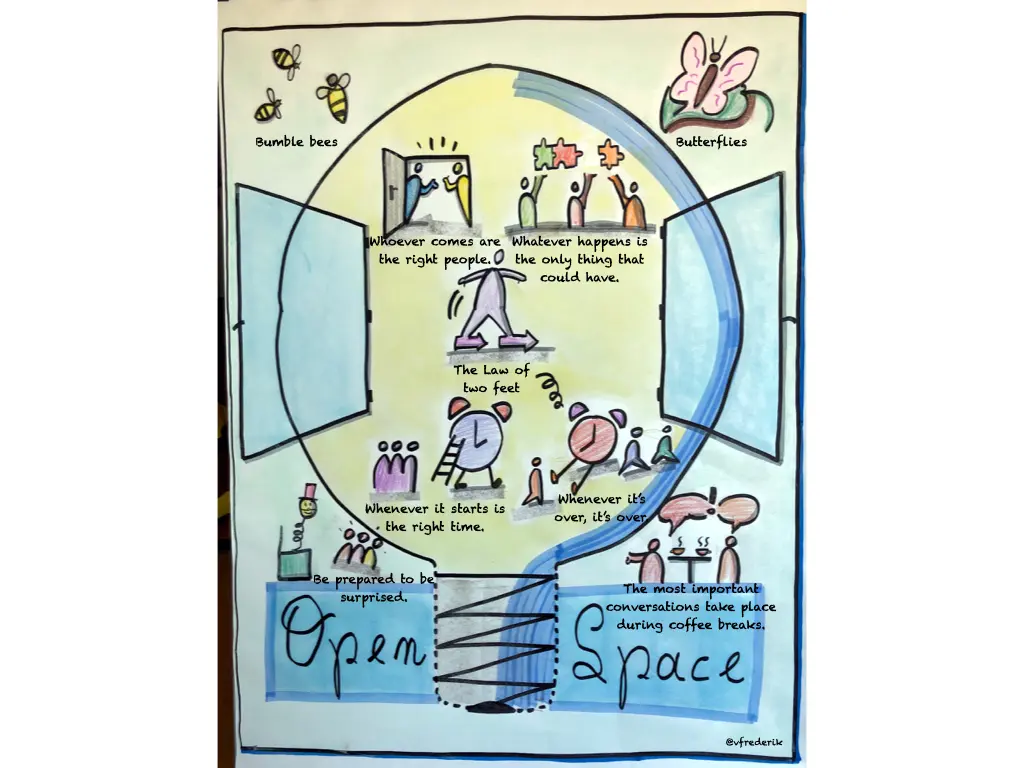
The five principles
- Whoever comes are the right people. Trust that the people needed for the conversations that need to happen are present.
- Whatever happens is the only thing that could have happened. Let go of expectations about outcomes and focus on what is happening now.
- Whenever it starts is the right time. Creativity cannot be forced by the clock.
- When it's over, it's over. When the energy or the topic is exhausted, it is time to move on.
- Wherever it happens is the right place. Meaningful conversations can happen anywhere.
The Law of Two Feet
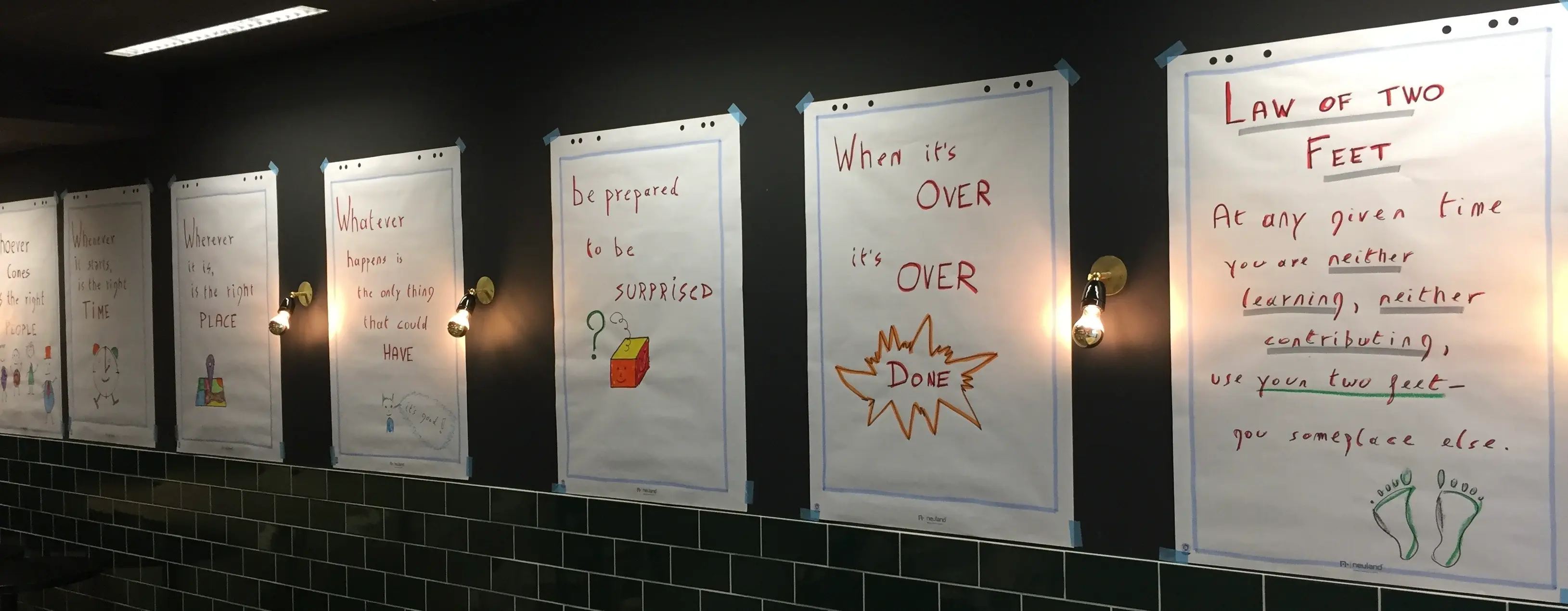
The heart of Open Space is the Law of Two Feet: if you are somewhere where you are neither learning nor contributing, use your two feet to move somewhere else. It is the engine of the process: it keeps energy high and ensures no one wastes time in a conversation that is not relevant to them.
The marketplace
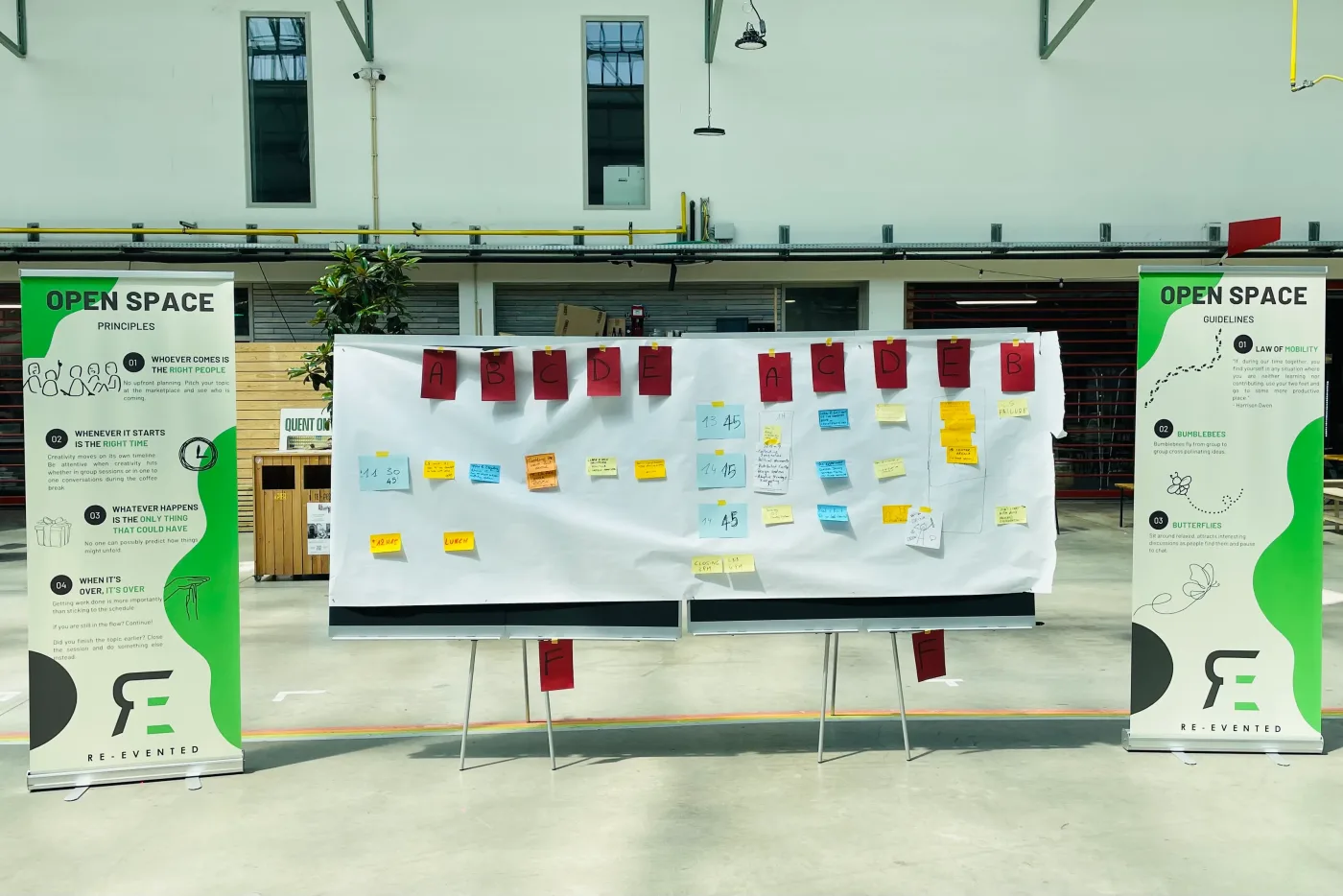
The marketplace is the heart of an Open Space day. At the start, participants propose topics they want to discuss. These are placed on the marketplace: a large wall or board with time slots and spaces. Participants choose which sessions they attend.
The slots on the board set a rhythm; how long a conversation actually lasts is up to the participants. See how a day works.
The role of the facilitator
An Open Space facilitator has a paradoxical role: I create the structure that makes self-organisation possible, but do not steer the content. I open the day, hold the marketplace, and maintain the space, both physically and psychologically.
The approach is light and serving. I trust the wisdom of the group and the working of the principles. Intervening in the content is the exception.
Open Space online
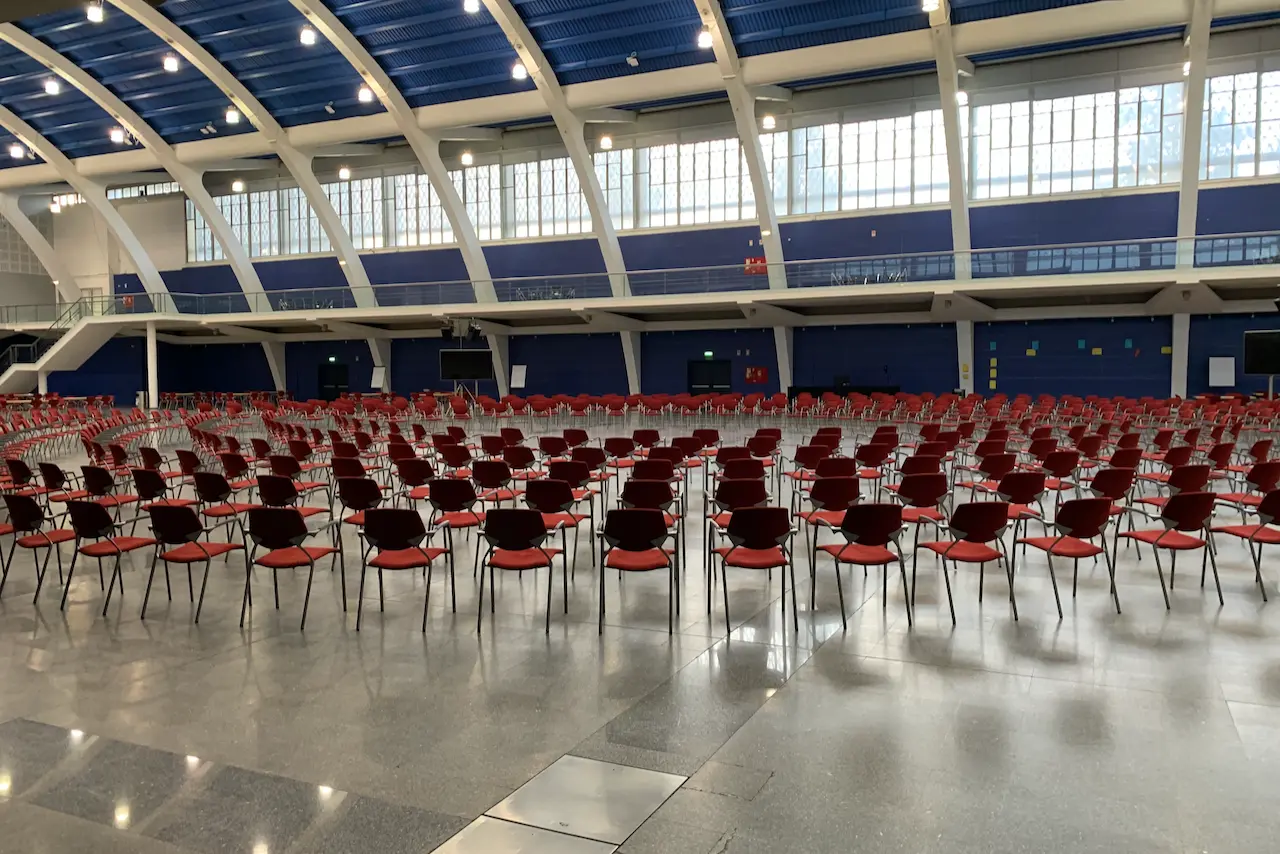
Open Space works online too. The hard requirement is that participants can move between sessions themselves. Without that, the Law of Two Feet disappears and the facilitator starts moving people around.
Standard Zoom manages this with self-selection for breakout rooms, alongside a Google Doc or a Miro or Mural board for the marketplace. More on what that requires in practice, and what happens to the harvest once somebody types it: what an online Open Space needs.
Open Space vs. other formats
Open Space is not the best choice for every purpose. Is the outcome already decided, is the group too small, does knowledge need to be transferred, or does a decision have to be made at the end? Then another format often works better. See when Open Space is not the answer.
Multi-day Open Space
An Open Space is not limited to a single day. Harrison Owen wrote that the method works equally well as a one-day workshop, a multi-day conference, or a recurring meeting — the duration adapts to the question, not the other way around. He himself cited one-day sessions, three-day conferences, and weekly staff meetings as examples.
A multi-day design creates room for what a single day cannot: depth, reflection, and translating conversations into action. A pattern I have seen work:
- Day 1 — Opening the conversation. Participants explore the theme through World Café or a similar dialogue format. The question sharpens, relationships form, and the group discovers what is really alive.
- Day 2 — Open Space. With the preparatory conversations of day 1 behind them, participants build the agenda themselves. The topics that now appear on the marketplace are richer, because people already know each other and dare to name the complex questions.
- Day 3 — Action and commitment. The harvest from day 2 is translated into concrete next steps. Formats like Liberating Structures — for example 1-2-4-All or Impromptu Networking — help the group move from insights to action, with clear owners and commitments.
This pattern works because it combines the strengths of each format: World Café opens the conversation, Open Space lets the group choose the depth, and Liberating Structures make the harvest actionable. The Law of Two Feet remains intact on day 2; on days 1 and 3, other forms supplement what Open Space alone does not do.
Frequently asked questions
What is Open Space Technology?
Open Space Technology is a meeting and collaboration format in which participants set the agenda themselves. There is no pre-determined content: only a central question and a structure that creates space for what is alive in the group. The method was developed by Harrison Owen in the 1980s and has been applied worldwide for groups of 12 to over 1,000 participants.
What is the Law of Two Feet in Open Space?
The Law of Two Feet (also called the Law of Mobility) is the heart of Open Space: if you are somewhere where you are neither learning nor contributing, use your two feet to move somewhere else. It is the engine of the process: it keeps energy high and ensures no one wastes time in a conversation that is not relevant to them.
What is the marketplace in Open Space?
The marketplace is the heart of an Open Space day. At the start, participants propose topics they want to discuss. These are placed on the marketplace: a large wall or board with time slots and spaces. Participants choose which sessions they attend. The agenda is completely flexible and can be updated throughout the day.
What group size is Open Space suitable for?
Open Space Technology works best for groups of at least 15–20 people, since parallel sessions require sufficient participants. The method has been applied worldwide for groups of over 1,000 participants. For small groups below 15 people, formats like World Café or dialogue sessions are often more suitable.
When is Open Space the right approach?
Open Space works best when the challenge is complex and has no ready-made solution, when diverse perspectives are needed, when buy-in for outcomes is essential, and when the group is large enough for parallel sessions (at least 15–20 people). It is particularly well-suited for conferences, strategy days, mergers, reorganisations and community events.
What is the difference between Open Space and World Café?
Open Space Technology and World Café are both participatory methods, but with different purposes. Open Space lets participants set the agenda entirely themselves and is ideal for broad exploration of complex challenges in larger groups. World Café is better suited for in-depth dialogue in small groups around pre-determined themes. They are also regularly combined: Open Space for broad exploration, World Café for deeper work on selected themes.